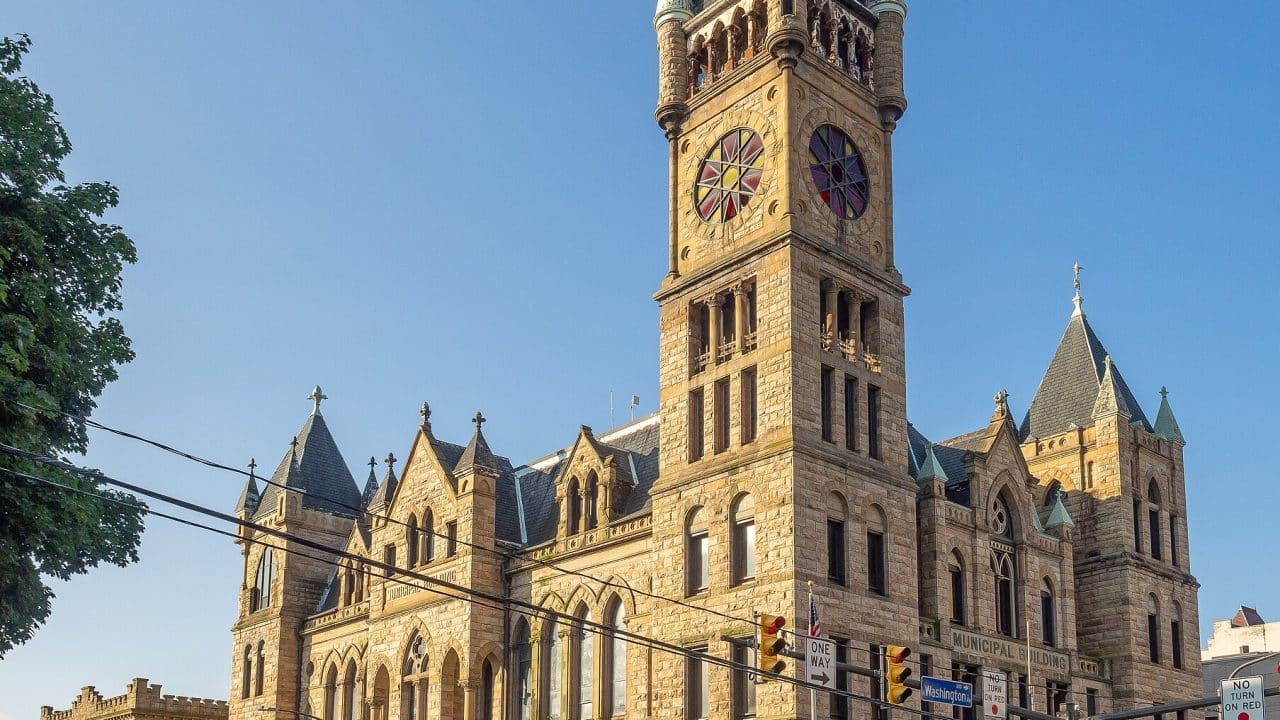
Scranton City Council’s lame-duck majority pushed through a $1.88 million purchase of the Fidelity Bank building next to City Hall last week, locking the city into a major real estate deal just days before a new council took office — and doing so without basic documentation, detailed plans, or a long-term financial analysis.
The 3–2 vote approved Mayor Paige Cognetti’s proposal to buy the former bank branch at 334–336 North Washington Avenue for use as a municipal annex. Council President Gerald Smurl, Bill King, and Jessica Rothchild voted in favor. Mark McAndrew and Tom Schuster voted no.
The administration has cited accessibility and potential future uses — including permit offices, code enforcement, and a police real-time crime center — as justification for the purchase. But critics argue council was asked to approve a major capital commitment without the safeguards typically expected for a transaction of this size.
Councilman-elect Sean McAndrew, who will take office with the new council, publicly urged members to slow the process and allow for fuller review.
“You’re being asked to approve a major real estate deal with no plans, no firm cost projections, no contract or architectural consultants on this idea they have and no long-term financial analysis tied to the upcoming budget,” McAndrew said.
Councilman Mark McAndrew echoed those concerns, describing the vote as rushed and questioning whether the city needs an annex at all. Schuster similarly warned of the risk of runaway costs that often accompany projects approved without clear scope or oversight.
During deliberations, Mark McAndrew also publicly drew attention to campaign donations made during this election cycle by members of Fidelity Bank’s board and executive leadership to Mayor Cognetti’s campaign — a point not reported by the Scranton Times despite its detailed coverage of the vote.
Campaign finance records show that eight members of Fidelity’s board and executive leadership donated a combined $13,000 to Cognetti during the current reporting cycle alone. Contributors included board chairman Brian Cali, vice chairman Michael McDonald, board secretary John Cognetti, CEO and director Daniel Santaniello, directors William Joyce Sr., HelenBeth Garofalo Vilcek, Paul Woelkers, and Alan Silverman. John Cognetti alone contributed $3,500, while the remaining officials each donated $1,500.
The campaign finance report does not disclose employer or board affiliation, meaning the connection is only apparent when contributions are cross-referenced with Fidelity’s publicly listed leadership.
While no laws were alleged to have been broken, the timing of those donations, combined with the absence of a feasibility study, detailed appraisals, or long-term cost analysis, raised concerns about transparency and process. Those concerns were compounded by the fact that the deal was finalized by an outgoing council, effectively binding the incoming body to a multimillion-dollar commitment without its consent.
Supporters of the purchase emphasized accessibility and future flexibility for city services. With Fidelity Bank expected to vacate the building once renovations to its new headquarters in the Scranton Electric Building are complete, the administration argued the opportunity warranted swift action.
Critics counter that speed is not a substitute for scrutiny — particularly when millions of taxpayer dollars are involved and newly elected officials are asking for time, documentation, and clarity.
With the purchase now approved, unanswered questions remain about cost, scope, and timing — and about why a deal of this magnitude was pushed through when it was, rather than subjected to the full review the public was promised.

Leave a Reply
You must be logged in to post a comment.